
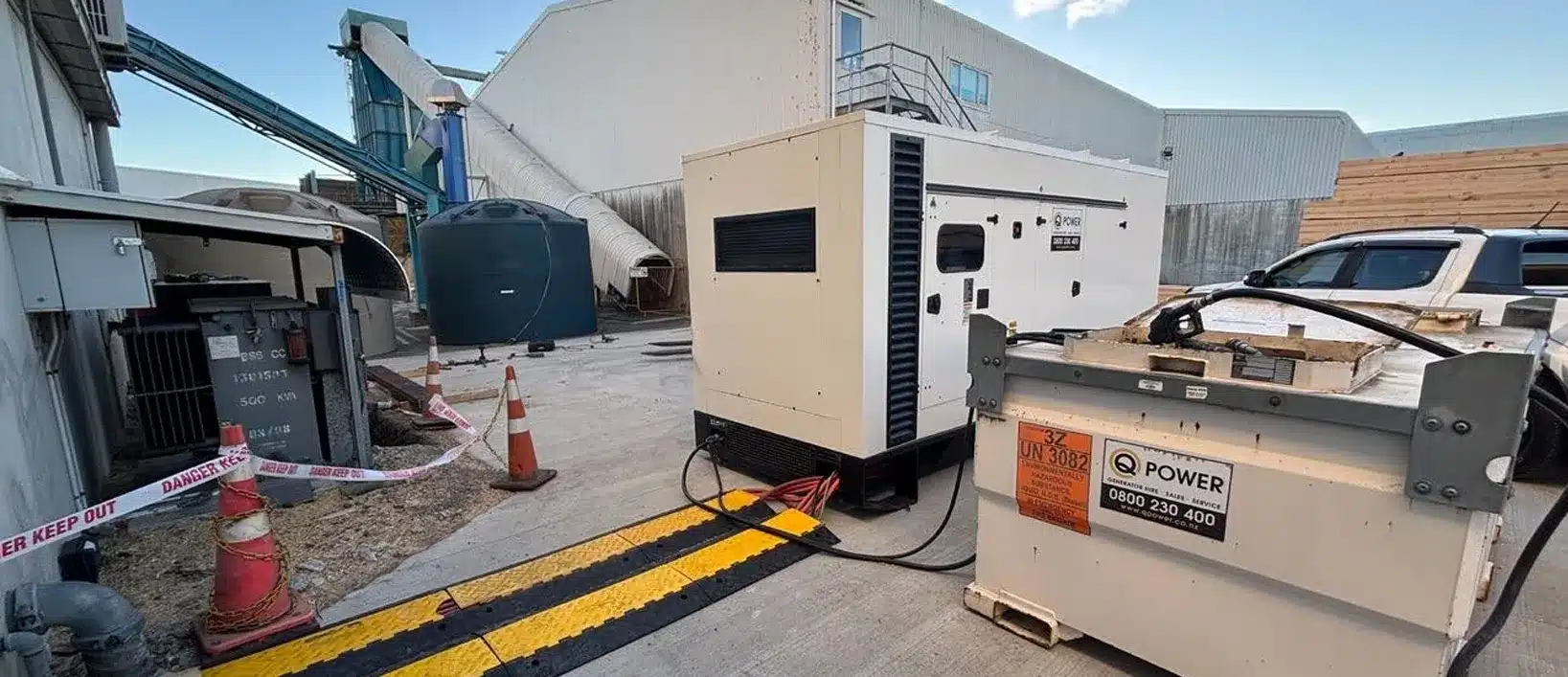
Temporary power requirements can change considerably over the life of a construction or infrastructure project. A generator that works well during site establishment may not be the most suitable option once the project moves through construction and into commissioning.
Planning the power requirement from the start can help reduce fuel costs, avoid unnecessary equipment changes and make it easier to scale the temporary power supply as the project develops.
For longer or more complex projects, looking beyond the immediate load and considering how the site will operate throughout the full project lifecycle can help create a more practical and cost-effective power solution.
Generator requirements can shift significantly as a project moves from site establishment through construction and commissioning.
Early stages may only require power for site offices, lighting and basic tools, while later phases may introduce cranes, hoists, pumps, compressors, HVAC equipment or specialist machinery.
Looking ahead at each stage helps ensure the temporary power solution for your construction project can adapt as the electrical load changes.
Rather than selecting equipment only for today’s requirements, consider what will be added later in the project and how the site’s demand is likely to increase or decrease. This can reduce disruption and make it easier to adjust the power supply as project conditions change.
The biggest individual piece of equipment does not necessarily determine the correct generator size.
Multiple smaller loads, single-phase and three-phase equipment, starting currents and future equipment requirements all need to be considered together.
A generator needs to handle both the site’s normal operating load and the short-term peaks created when motors, pumps, hoists or other equipment start.
Choosing a generator based only on the average running load can result in equipment that struggles during peak demand. Equally, selecting an unnecessarily large generator can increase fuel consumption and hire costs.
A proper site load assessment helps determine the most appropriate generator capacity for the project’s actual requirements.
Construction projects often have significant differences between their peak and normal power requirements.
A crane or hoist, for example, may require a large amount of power for a relatively short period before the site’s demand drops again.
For applications like these, a hybrid generator and battery power system can provide an alternative to running a large diesel generator continuously.
Q Power’s P-Grid hybrid systems are designed for intermittent high-load applications including construction sites, tower cranes, hoists, pumps and other industrial equipment.
By combining battery storage with generator power, the system can supply higher peak loads while allowing a smaller generator to operate more efficiently during periods of lower demand.
How the generator will operate is just as important as the amount of power required.
A construction site operating continuously 24/7 has very different requirements from one where most electrical demand occurs during standard working hours or where high loads only operate intermittently.
The operating pattern can influence generator selection, fuel consumption, servicing intervals and the most practical fuel arrangement.
Matching the equipment to the way the site actually uses power can help reduce unnecessary running costs over a long hire period.
For temporary projects, diesel generator hire can also provide the flexibility to adjust equipment as the project progresses.
Temporary power requires space for more than the generator itself.
The location of generators, fuel tanks, cables and distribution equipment should be planned alongside vehicle access, construction activities and the areas where electrical power will be required.
Consider how equipment will be connected, what outlets are required, where temporary distribution boards will be located and how the generator can be reached for refuelling and servicing.
Good planning can also help reduce long cable runs and minimise the need to relocate equipment as work progresses across the site.
WorkSafe New Zealand recommends carefully planning the position of temporary electrical supplies on construction sites and notes that temporary supply switchboards should be installed and connected by licensed electrical workers. Read WorkSafe’s guidance on electrical safety for construction sites.
Fuel requirements should be considered at the same time as generator capacity.
The site’s operating hours, average electrical load and expected generator runtime will all influence how frequently refuelling is required.
For long-term construction and infrastructure projects, reducing the number of fuel deliveries can help simplify site operations and reduce interruptions.
The generator and fuel storage location should therefore allow safe access for refuelling vehicles without interfering with other construction activities.
The cheapest generator on day one is not always the most economical solution over the full project.
Fuel consumption, hire duration, servicing, transport, cabling, distribution equipment and the ability to scale the power supply can all have a significant impact on the total cost.
This becomes particularly important on projects operating for several months or where generators are running for extended periods each day.
Hybrid power systems may have a higher initial cost than a conventional generator setup, but on suitable projects they can reduce generator runtime and diesel consumption while also reducing noise and emissions.
Looking at the full project cost rather than the equipment hire rate alone can help identify the most efficient temporary power solution.
Construction sites can be demanding environments for electrical equipment, with cables, outlets and distribution equipment exposed to weather, machinery and ongoing site activity.
Temporary electrical systems therefore need to be appropriately installed, protected and maintained throughout the project.
WorkSafe advises that construction-site temporary supplies must meet relevant New Zealand electrical safety requirements, including appropriate RCD protection and certification for temporary supply switchboards.
View WorkSafe New Zealand’s construction-site electrical safety guidance for further information.
A well-planned temporary power setup should support the project as it changes rather than becoming another constraint to manage.
By considering future loads, operating hours, generator sizing, site access, fuel requirements, electrical distribution and total project cost from the beginning, you can create a power solution that is better suited to the full project lifecycle.
Q Power can help plan and supply temporary power for construction and infrastructure projects, with diesel generator and hybrid power options selected around the site’s practical requirements.
Talk to the Q Power team about the right temporary power setup for your project.

© 2026 Q Power All Rights Reserved l Privacy Policy | Terms & Conditions | Web Design by Virtual Innovation